A friend asked me over coffee what ethic I bring from my days as an attorney to the cheese counter. I told him that I was a client-centered attorney, and now I’m a customer-centered cheesemonger. My job was always to find out what my client …
Wrapped in stinging nettles before it matures, Cornish Yarg is one of the most recognizable cheeses in Britain. The nettles encourage a delicate bloomy rind while the interior stays creamy, fresh, and lightly tangy. It’s the kind of cheese I always associate with summer: perfect …
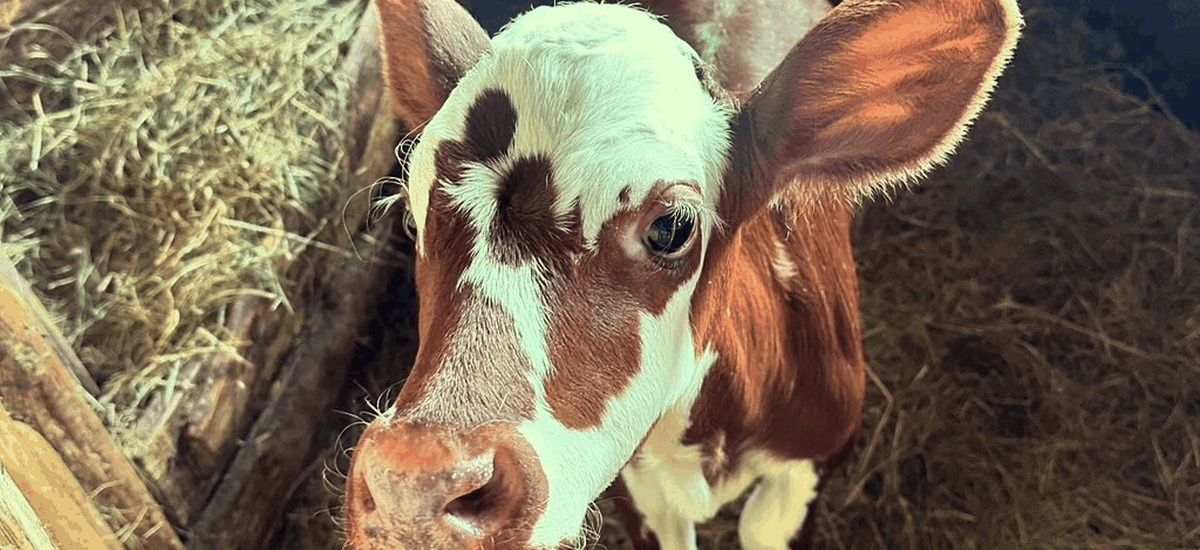
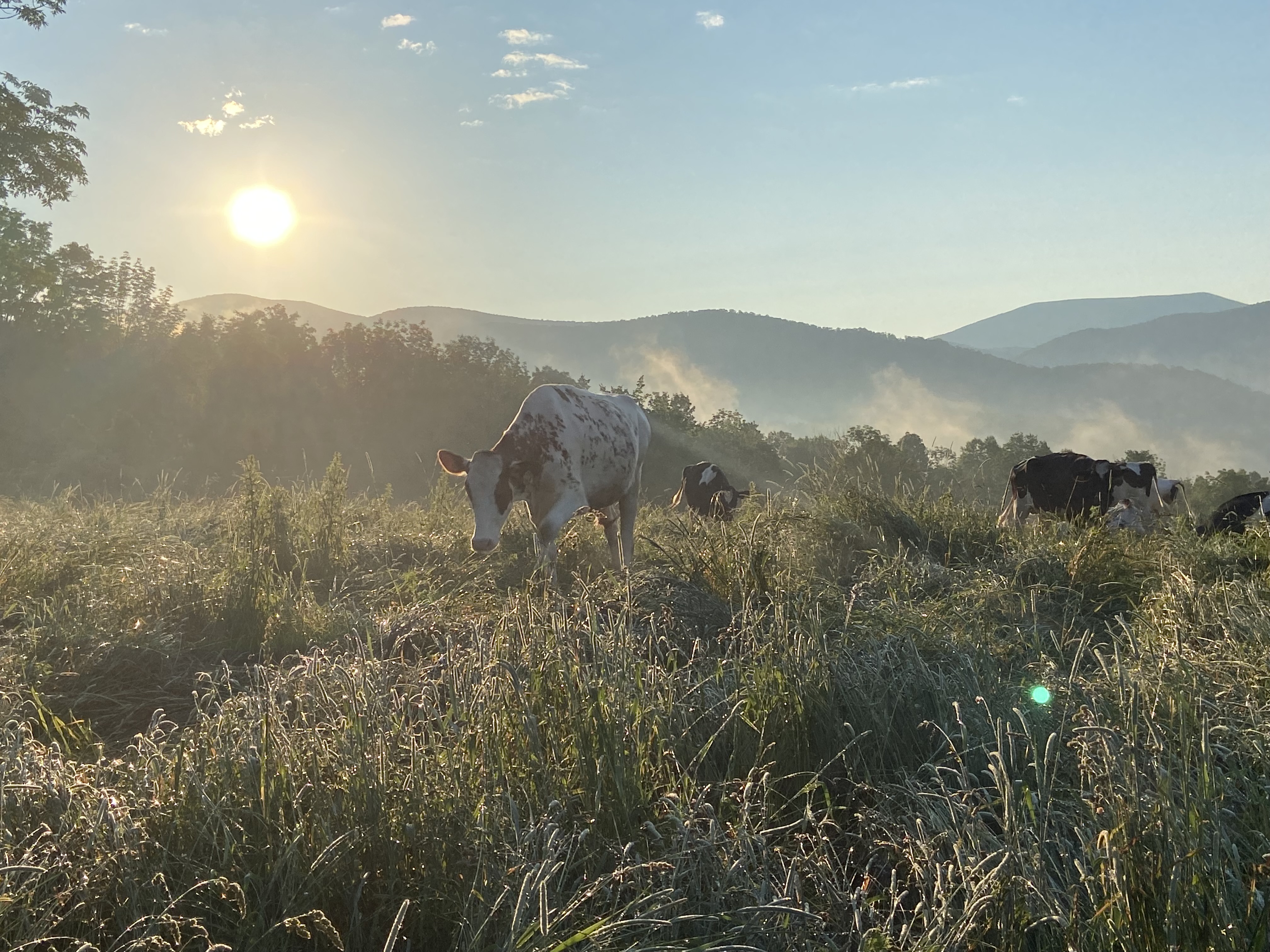
For many years, Consider Bardwell Farm made Pawlet and Rupert from Woodlawn Farm’s cow milk. Consider Bardwell closed shortly after Covid due to some bad luck, but the Leach family at Woodlawn decided to keep the cheese going, so they brought the cheesemaking to their dairy farm. The Leaches have been on their farm for seven generations, and I think it’s beautiful they’ve figured out a way to keep things going. They even hired back the award-winning cheesemaker, Leslie Goff Tyminski, who had so much success with Consider Bardwell.
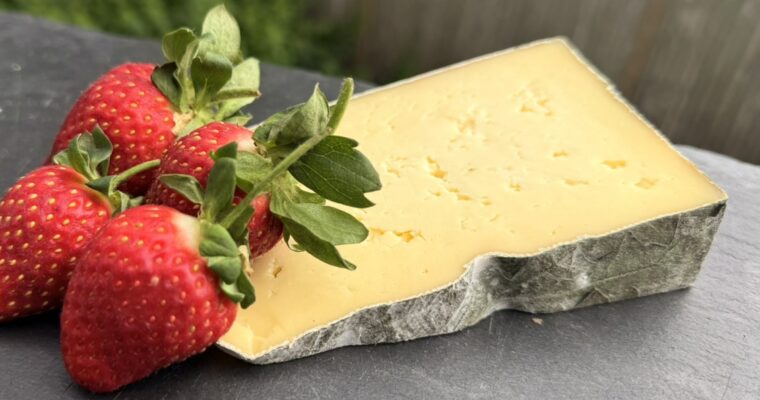
Pawlet: Washed rind, aged 4-6 months, toma-inspired. Mild & buttery. A nice melter! If anyone is looking to zhuzh up a burger, this could be it. Also a great intro cheese for washed rind skeptics. Please notice the gorgeous mold (not mold 🦠) pattern on the wheel!
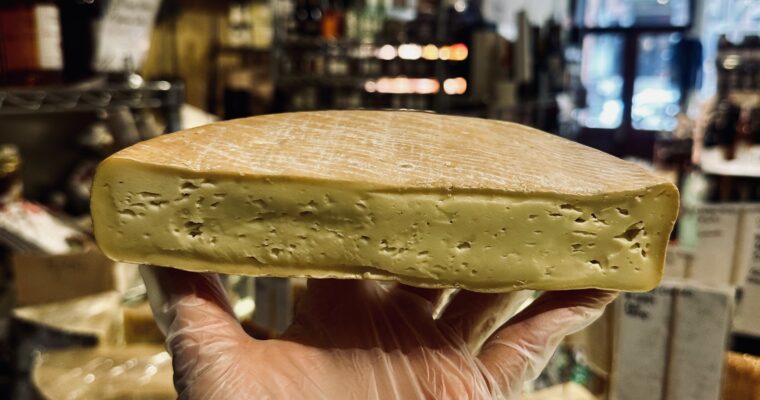
Rupert: Alpine style, aged 6-12 months (I suspect our current guy is on the younger side,) fruity, also a great melter but also great on a cheese board. Very Vermonty.
I’ve met Kate Leach a few times at Formaggio Kitchen when she’s in town delivering the cheese. She’s a sweet woman and always excited to talk cheese, and has invited us out to see the creamery. I’d like to get an overnight Vermont trip scheduled to visit other creameries as well!
(If you’re wondering what toma means, it’s sort of northern Italian farmer cheese. It sounds fancier than it is. It does not refer to Pt. Reyes Toma.)
(Also, for you cow nerds, their Holsteins are not the giant industrial gals, they’re ladies who’ve been conscientiously bred on their farm for many cow generations.)
The Big Three: A Rebirth in West Cork In the 1970s, a quiet revolution began in the counterculture kitchens of West Cork, Ireland. It was led by Veronica Steele, the pioneer who created Milleens and gave rise to the Irish farmhouse cheese industry. Soon after, …
I ran the final miles with my heart hammering against my ribs, but the relief kept me moving. My fur was dull and matted with the dust of the road. My body was so much stronger than when I left, but I was weary. Yesterday, …
Now that we’re back from our winter break, it’s time to start the year with the heavyweights. It is still snowing as I write this, and there is no better “snow day” cheese than a cooked-curd Alpine. The two neighbors, Swiss Le Gruyère AOP from the Alps, and French Comté AOC from the Jura, are often spoken about in the same breath. They share a landscape and a lineage: both are raw cow’s milk cheeses, born in the mountains to survive the long, lean winters when the cows are tucked away in barns and the fresh milk stops flowing.
Eglantine: I’ve walked both pastures and I can tell you: there’s naught between them in technique, but they’re worlds apart in philosophy. They might share a horizon, but they aren’t the same cheese.
(If you’d like to read about Eglantine’s adventures in the Jura and the Alps, click here)
The Shared Blueprint
Before we get into the rivalry, let’s look at why they’re siblings. Both cheeses are made with raw milk from local dairies, usually no more than 20 to 25 km (12 to 16 miles) from the cheesemaker. They are both:
Cooked and Pressed: The curds are cut tiny (like grains of rice) and heated in copper vats to drive off moisture, creating a cheese that can age for years.
Aged on Spruce: They spend their adolescence on Jura spruce boards, which breathe with the cheese.
Washed with Morge: This is the brine-bacteria mixture rubbed onto the rinds to encourage the “good” microflora that creates that savory, funky depth. You can read more about washing cheese here
The Divergence: Breed and Brine
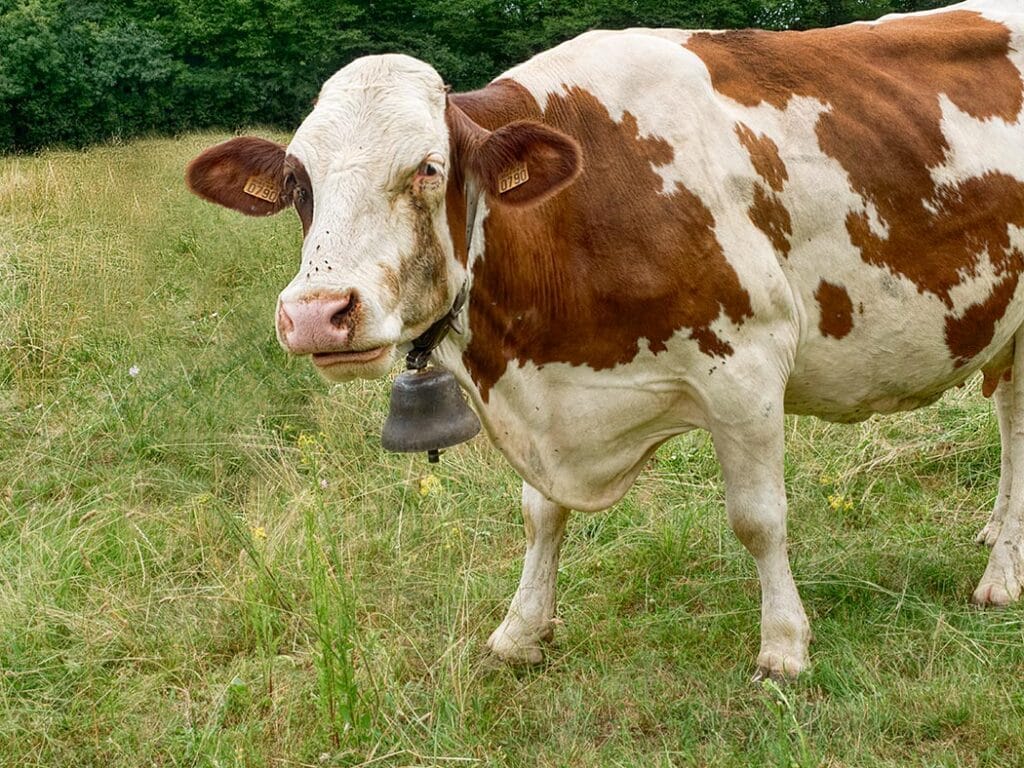
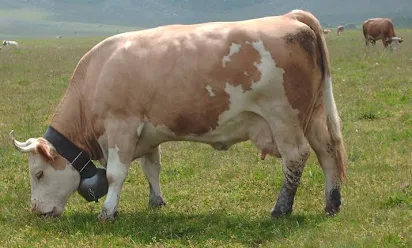
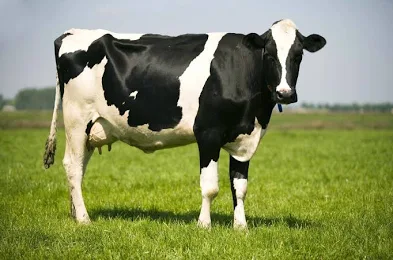
Eglantine: The difference starts right in the muck of the field. Comté is strictly the domain of those Montbéliarde or Simmental lasses. With Gruyère, they aren’t half as fussy, though it’s mostly the black-and-white Holsteins you’ll see dotting the Swiss hills.
Then there’s how the cheese gets salted. Comté wheels are usually dry-salted, whereas Gruyère is often soaked in a brine bath. It sounds like a small detail, but it changes the immediate impact on your tongue.
Think of Gruyère as having a bolder, earthier funk right out of the gate. It’s brothy and meaty. Comté is the slow burn. It’s more subdued, sweetly nutty, and often hits those high notes of pineapple or browned butter.
MontbéliardeSimmental Holstein Friesian
A Real Feud!
For centuries, these cheeses were essentially the same family, with the French calling their version “Gruyère de Comté.” But the 1951 Stresa Convention forced a messy divorce. The Swiss claimed the name for the town of Gruyères, and the international courts ruled that if the French wanted to keep using the name, their cheese was legally required to have holes. By 1986, the producers in the Jura had seen enough. They dropped the “Gruyère” label entirely to reclaim their own identity, choosing to stand solely as Comté.
Aritz: You see? It is the typical arrogance of the state and the lawyers, trying to put a fence around a name that belonged to the mountain people long before borders were drawn on a map. The Swiss wanted a monopoly on a word, and the French bureaucrats were happy to trade away their history for a seat at a convention table. They told us we could only be “Gruyère” if we made a cheese that looked like a sponge, full of holes that shouldn’t be there.
But the farmers of the Jura, they had the last laugh. They didn’t need the Swiss name to prove their worth. They took “Comté,” a name that belongs to the land and the fruitières, and they made it a symbol of something better than a trademark. It was an act of secession. Today, Comté is the most beloved cheese in France not because a court said it could be, but because the people chose the independence of the Jura over the rules of the Swiss.
A Tale of Two Systems
The real split is cultural. Swiss Gruyère prioritizes a certain balance and consistency. It stays composed, even when aged. French Comté, however, celebrates variation. Because Comté is made in fruitières (cooperatives) and then handed off to separate affineurs (cheese agers), the flavor of a summer wheel can be wildly different from a winter wheel. Read more about the seasonality of milk here
Aritz: The fruitière is a beautiful piece of social architecture. It is a cooperative where the milk is pooled, and the profit stays with the farmers. It is the community defending the milk.
The Swiss? They have a Teutonic need for order. Their Gruyère is magnificent, yes, but it is disciplined. It is controlled. It reflects a German-influenced need for every wheel to be a perfect citizen.
The French, however, allow for passion and chaos. I do not easily pay compliments to the French state, but their system for Comté allows the land to speak louder than the rules. They don’t try to hide the season or the mood of the cow. They let the cheese be what it is.
Eglantine: Oh, give over, Aritz. You know as well as I do that the Swiss have plenty of fire in ’em when they want. What was that lass called… Sylvie?
Aritz: Bai. Sylvie. Ai, zer emazte ederra!
The Crunchy Bits
People often ask about those crunchy white specks found in aged Alpines. Those are tyrosine crystals, which form as proteins break down during the aging process. You will usually start seeing that satisfying crunch in a Comté around the 12 to 18-month mark. Gruyère is denser and much more close-textured, so you won’t find nearly as many crystals even in the older wheels.
The Formaggio Connection: Marcel Petite
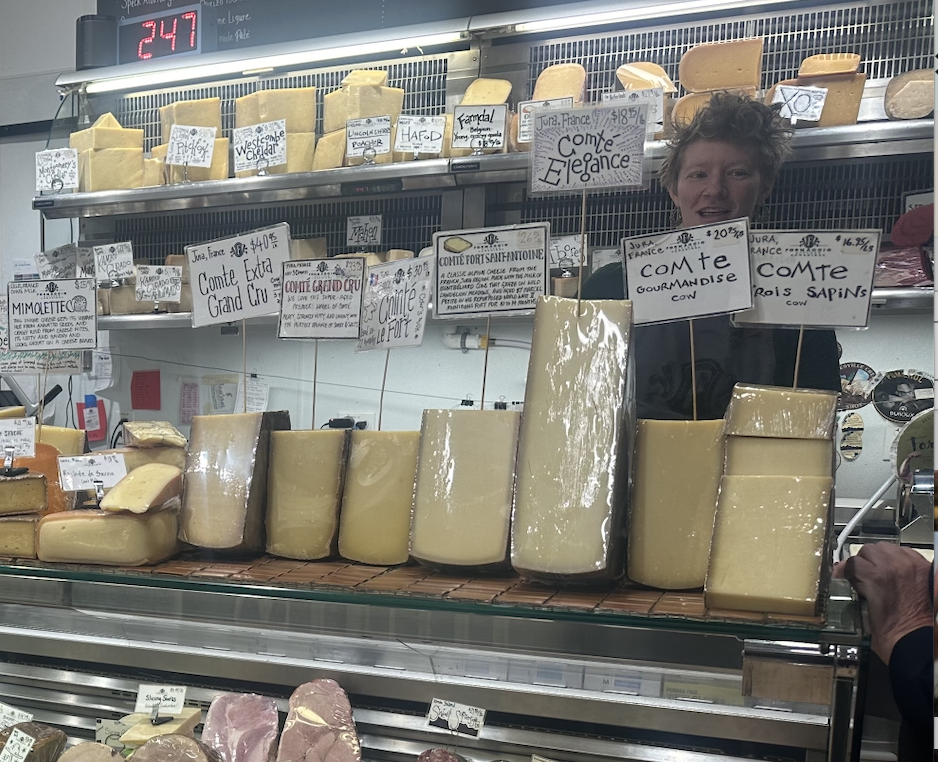
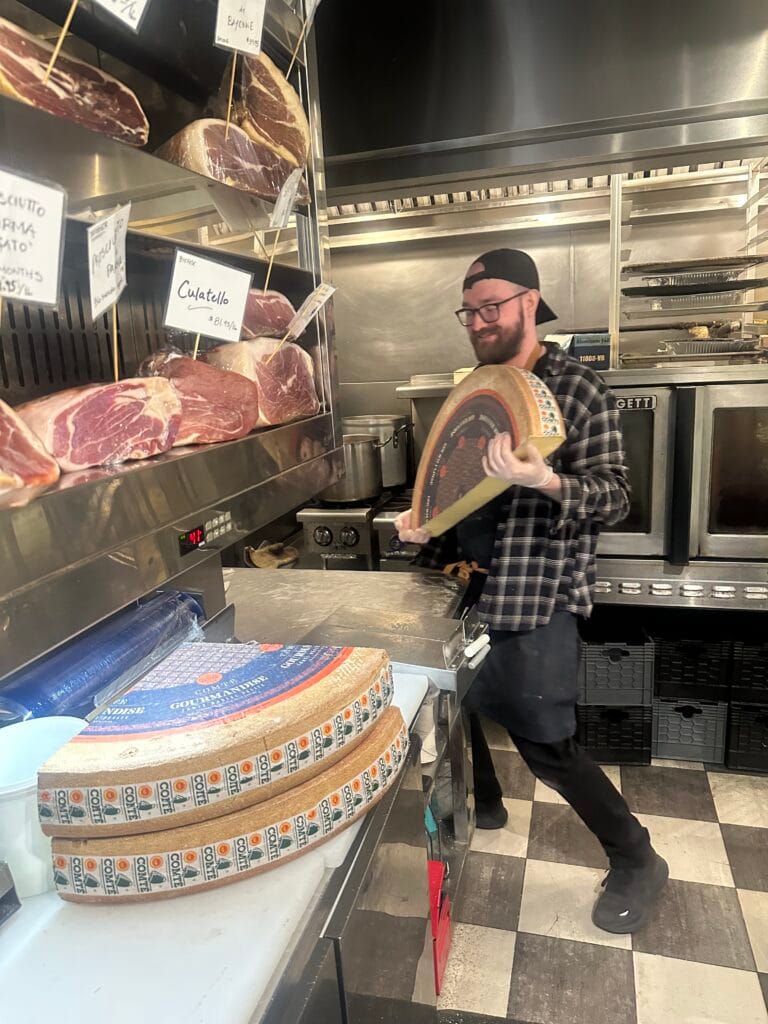
If you’ve visited me at Formaggio Kitchen, you know the Comté we stand behind: Marcel Petite. Marcel Petite changed the game by aging wheels at Fort Saint Antoine, an old military fort, at lower temperatures than traditional aging rooms. This slower, colder maturation allows the flavors to develop with nuance. It’s Comté at its most expressive.
Comté Grade: Look for the Bell
In France, that passion is backed by a strict grading system. Every wheel of Comté is inspected and scored out of 20 points. When you are looking at the counter, pay attention to the labels:
The Green Band (Comté Extra): If a wheel scores 14 or higher, it gets a green label with a little bell logo. This is the top tier.
The Brown Band: If a wheel scores between 12 and 14, it gets a brown band. It is still delicious, but it lacks the perfection required for the green bell.
The Rejects: Anything scoring below 12 cannot be sold as Comté. It is still edible and often a great melting cheese! It often ends up in fondue mixes, or turned into La Vache Qui Rit (The Laughing Cow)
The bell is a harkening back to the beginning of the process. It is a direct tribute to the very first step of the process: the cows grazing on mountain flowers. In the Jura mountains where Comté is made, the cows spend their summers in high-altitude pastures. They each wear a heavy, hand-forged bell so the farmers can find them in the thick mountain mists. Those bells aren’t just for show; they are the soundtrack of the Jura summer.
Gruyère Grade: Look for the Sunburst
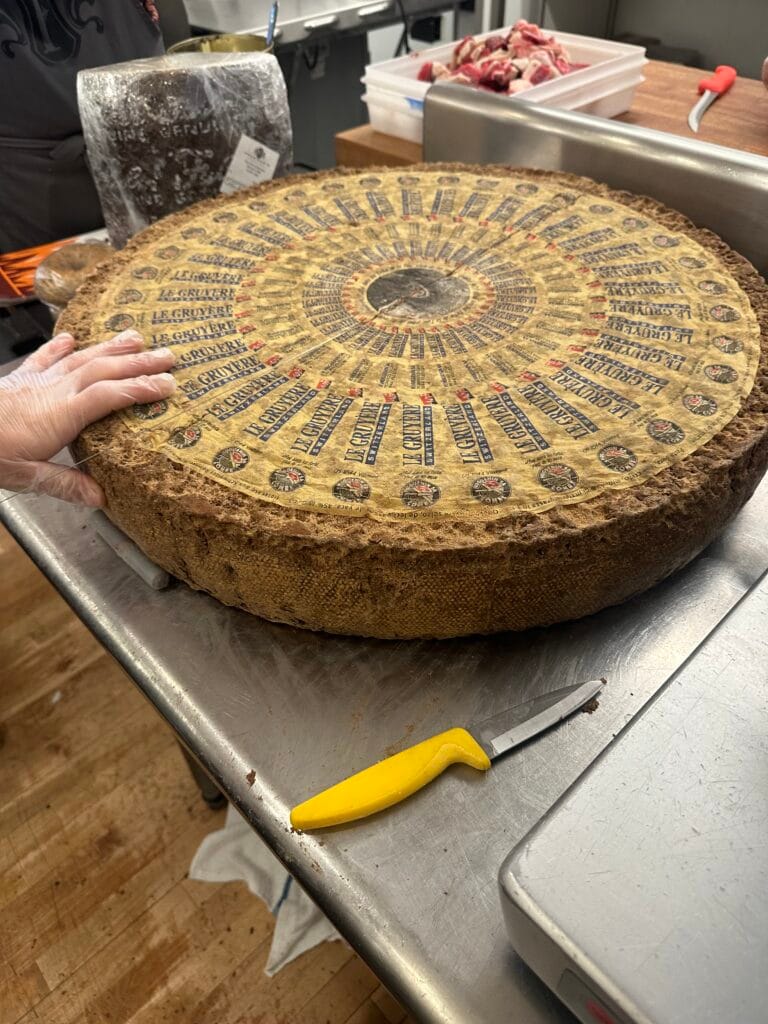
Swiss Gruyère does not use a color-coded band. Instead, you will see “Le Gruyère AOP” stamped in a repetitive, sunburst pattern across the entire rind. It is uniform and predictable, exactly as their system intended.
Cooking with Comté and Gruyère
Both cheeses are at home on a cheese board and in the kitchen. Gruyère is the glue of fondue because of its high fat-to-protein ratio and melty consistency, especially in younger Gruyères. Comté is a fabulous addition for flavor in a gratin or croque monsieur!
Which one wins?
Neither cheese is “better.” They are two different answers to the same question, shaped by how much a culture values control versus variation. If one has ever felt too familiar or the other too subtle, it may simply be a matter of meeting the right wheel at the right moment.
Next time you’re at the counter, ask for a taste of both!
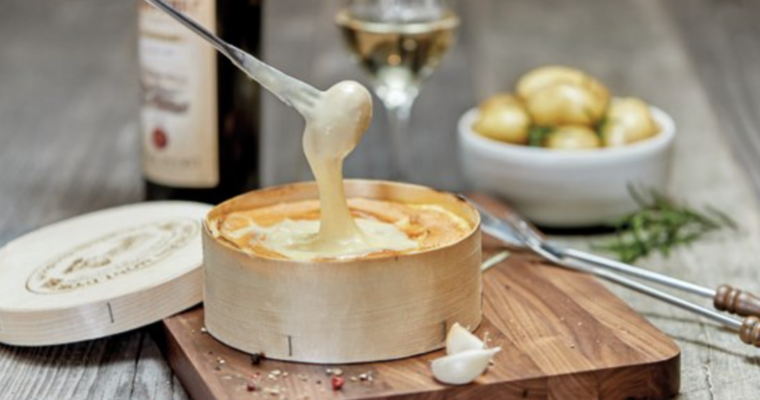
The Cheese for the Coldest Months Vacherin Mont d’Or is the ultimate holiday season cheese, and that has less to do with marketing than with timing. It is made in the colder months, when alpine herds have come down from high pastures and milk is …
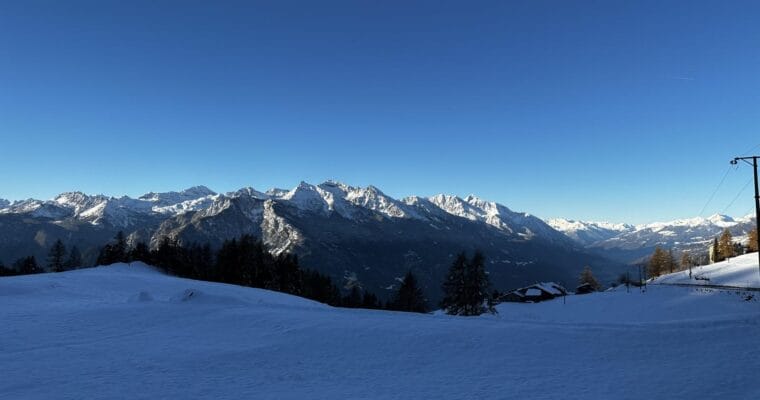
Eglantine Crumb’s Field Notes Full Moon, Snow Settled Vallée de Joux, Jura Near the French-Swiss Border I’ve been in the Jura for a time. How much time? I don’t know. But I have a curious feeling of being very aware of time, and not especially …
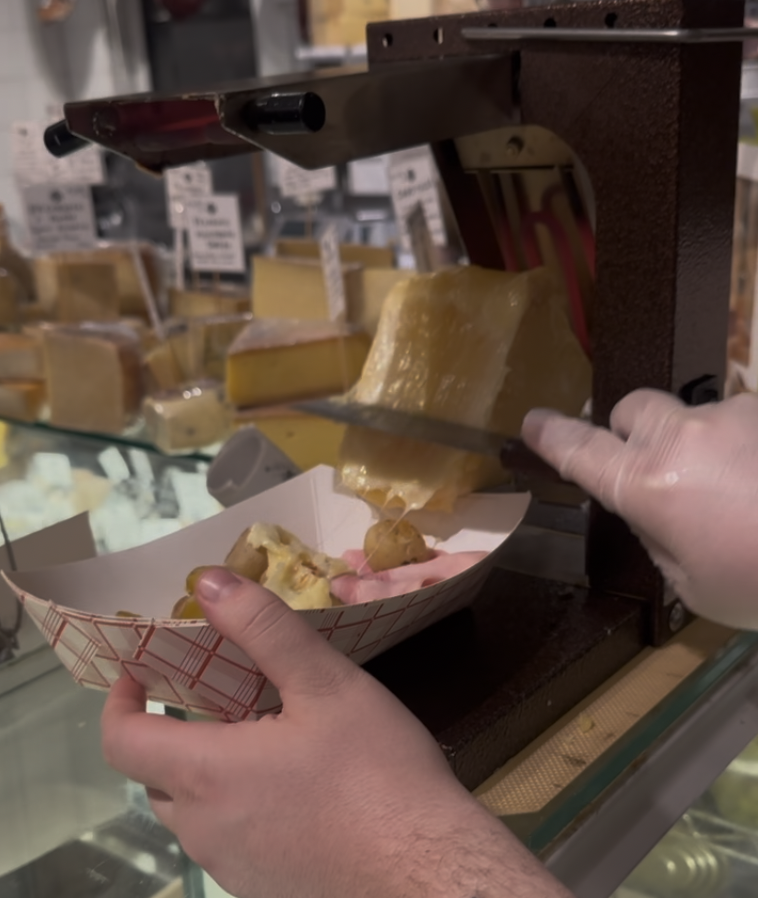
We’re serving raclette at the South End Formaggio Kitchen this winter season where I work as a Cheesemonger. Happily, I’m also teaching a class on raclette (and fondue) at the Formaggio Kitchen in Cambridge. We’re keeping it seasonal around here!
What is Raclette?
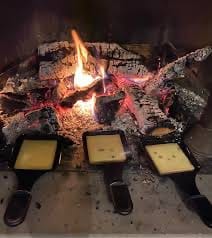
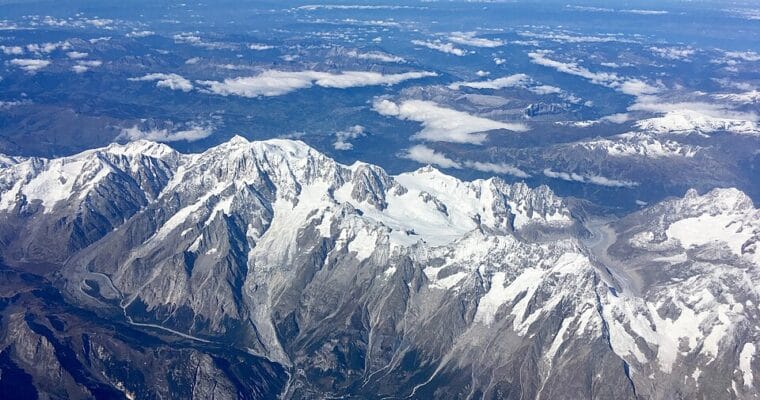
Raclette can be both a noun and a verb. It refers to the cheese itself, and to the method of melting and scraping that cheese onto food. Raclette comes from the Swiss Alps. Picture a cold evening in the mountains, people gathered around a fire, softening a half-wheel of cheese and scraping the melted layer onto potatoes. It’s one of those simple foods that makes complete sense the moment you try it. One of our founders, Eglantine, shared a page of her journal about her adventures in the Swiss Alps, and you can read it here.
Raclette is a raw cow’s milk alpine cheese, but it isn’t as firm as Gruyère or Comté. It’s a washed rind, so it can be quite funky. Because it’s younger than many alpine cheeses, it melts a lot more easily.
Why Raclette Melts So Well
In order for cheese to melt well, a few things need to be true:
1. Enough moisture Younger cheeses still hold water. That moisture turns to steam when heated and softens the cheese from within. As you’ve probably noticed, very dry, aged cheeses, like Parmigiano, get oily or grainy instead of creamy.
2. A flexible protein structure As cheese ages, proteins tighten and become more rigid. In fact, his is why older cheeses grate beautifully but don’t melt smoothly. Raclette’s proteins are still relaxed enough to flow.
3. Balanced fat Fat gives melted cheese its silkiness. Too much fat and it separates. Too little and the cheese gets rubbery. Raclette has a natural balance that keeps it smooth and glossy.
4. Moderate acidity High acidity causes cheese to tighten up instead of melting. Raclette is low-acid, which keeps the melt stretchy and even.
All of these traits are part of how the cheese is made. It’s the milk, the cooking temperature of the curd, the size of the cut curds, the aging environment, and the short maturation time. Raclette is designed to be a melting cheese from the start.
A Little History
Raclette has been around for centuries in the Valais region of Switzerland. Herdsmen would take wheels of cheese up into the mountains with them for the summer. As a result, the cheese was firm enough to travel but soft enough to heat by the fire. They would warm one side and scrape the melted layer onto bread or potatoes. Racler in French means “to scrape,” which is where we get the name.
The modern raclette machine, which you may have seen at markets or in restaurants, is just an updated way of doing the same thing with more control and less smoke.
Raclette vs. Fondue: What’s the Difference?
Both are winter comfort traditions and are excellent ways to show off alpine cheese. They come from the same general region, they use similar cheeses, and they both make the table feel cozy. But they’re not the same thing!
Eglantine:“Everyone talks about fondue like it’s a big event, but raclette is the one I reach for when I’m cold and hungry.” Aritz:“Fondue is a recipe. Raclette is a cheese. Let each thing do its job.” Eglantine:“Exactly. Scrape, eat, and don’t faff about.”
Raclette is the cheese itself. You melt a single cheese, Raclette, and scrape it over food. You’re tasting the cheese in its pure form, just melted.
Fondue is about the blend. A classic Swiss fondue is a mixture: usually Gruyère and Emmentaler, sometimes with Appenzeller added. The cheeses are grated and melted together with white wine, garlic, and a little kirsch. You’re creating a sauce with multiple ingredients, the texture is more liquid and the flavor is shaped by the wine as much as the cheese.
How to do Raclette or Fondue
Equipment:
Raclette uses direct heat. It could be a raclette machine, fire, broiler, or pan, to melt the surface of a wheel or a slice.
Fondue uses a pot over steady heat, often with a flame underneath to keep it warm.
How you eat it:
Raclette is scraped onto potatoes, bread, vegetables, or charcuterie.
Fondue is something you dip into with bread cubes, boiled potatoes, or vegetables.
Texture:
Raclette is stretchy and glossy, almost like thick lava.
Fondue is thinner, more like a smooth cheese sauce.
Flavor:
Raclette has a bit more funk from the washed rind.
Fondue tastes cleaner, nuttier, and wine-forward.
The vibe:
Raclette feels more rustic. You’re scraping from a wheel. You can find it at Christmas markets, it’s more like street food.
Fondue feels more communal. Everyone is dipping into the same pot. So, it’s a little more formal because of the setup, but it’s definitely a party!
How to Serve Raclette at Home
You don’t need much. The joy of raclette is in its simplicity.
The Cheese:
Traditional Swiss Raclette
French Raclette de Savoie
Or a similar alpine melting cheese if needed, make up your own!
What to melt it on:
Boiled or steamed potatoes (small yellow potatoes are ideal)
Slices of crusty bread
Roasted vegetables
Blanched or steamed broccoli
Even mushrooms or small onions
What to serve alongside:
Charcuterie (salami, ham, prosciutto)
Cornichons
Pickled onions
Mustard
Simple greens
You can use a raclette grill, a broiler, a cast-iron skillet, or even just a small pan on low heat. The goal is gentle, gradual melting. Once it softens, you scrape or spoon the melted top layer over your plate. That’s why it’s one of the best ways to experience the cheese. Raclette is warm, elastic, and incredibly satisfying. It’s cozy food, and it makes a long winter feel a little more cozy.
Eglantine Crumb’s Field NotesWaxing Rind Moon, Snow Deepening Chalet above Martigny, near La FoulyCanton of Valais, Switzerland On my last evening with Aritz in Aosta, we had what he called a simple meal, though it felt quite grand to me. We were on the banks …